Author’s Note
THE COLOR OF SACRIFICE
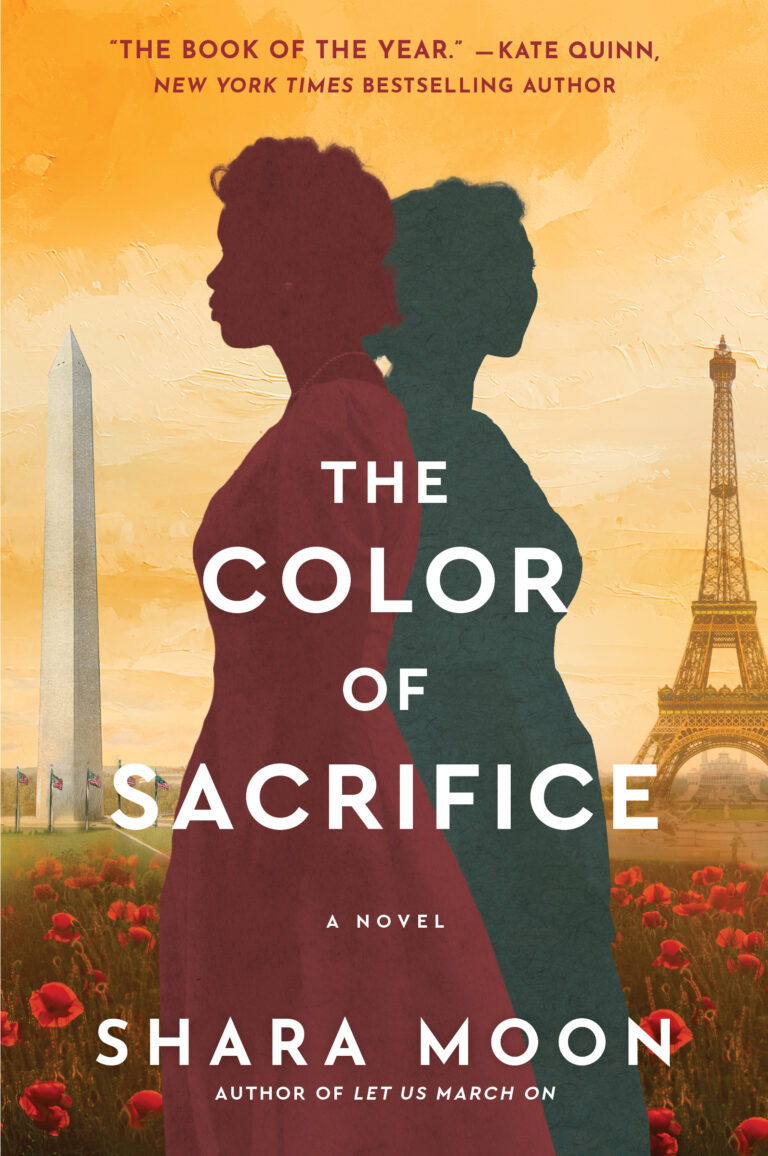
The Gold Star Mothers and Widows Pilgrimage remains a powerful, yet little known moment in American history.
Years ago, while researching another project, I stumbled upon the story of the Gold Star Mothers Pilgrimage-a government-sponsored trip that brought mothers and widows across the Atlantic to visit the graves of their loved ones lost during the Great War (1914-1918). What captivated me most was not simply the pilgrimage itself, but the women who chose to decline the invitation because of its segregated nature.
In the years after World War I, thousands of American families were left grieving sons and husbands buried far from home in the military cemeteries of Europe. To answer that grief, Congress authorized a federally funded program in 1929 to allow eligible mothers and unremarried widows of fallen American servicemen to travel overseas and visit their loved ones’ graves. Mothers were given first priority for the Gold Star pilgrimage invitation. A widow was offered the opportunity only if the serviceman’s mother was deceased, unable to travel, or declined the invitation.
Between 1930 and 1933, the U.S. Department of War organized what became known as the Gold Star Mothers and Widows Pilgrimage, transporting these women to France and other European burial sites at government expense. More than 17,000 women were identified as eligible, and nearly 6,700 ultimately made the journey. The army arranged their rail travel to New York, ocean passage across the Atlantic, lodging, meals, medical care, sightseeing, ceremonies, and visits to the American cemeteries.
For many women, the pilgrimage offered the first and only chance to stand at the grave of a son or husband lost in the Great War. At the cemeteries, the women were escorted individually to the graves, given flowers or wreaths, and allowed private time to mourn. Many returned home expressing gratitude and relief, saying the journey gave them a measure of peace.
Yet the pilgrimage was also marked by one of the sharpest racial controversies of the interwar period. Although the law authorizing the trips did not require segregation, the war department chose to organize the pilgrimages according to race. White mothers and widows generally traveled aboard luxury liners and stayed in first-class accommodations, while Black mothers and widows were placed in separate groups, often assigned to less prestigious ships and segregated lodging. Officials defended this policy by claiming it would provide greater “comfort” for all travelers, but Black newspapers, civil rights organizations, and many African American citizens protested this policy.
The NAACP and other groups vehemently protested the segregation, and some Black Gold Star Mothers and Widows refused to participate under these discriminatory conditions. Others chose to go anyway, unwilling to surrender their only opportunity to see the graves of the men they had lost. Their choices were made both personal and political.
By the end of the program, hundreds of Black women had made the journey. Among the 6,693 who accepted the invitation, roughly 279 African American mothers and widows participated, although more than 600 Black women were considered eligible. The final pilgrimage for the Black Gold Star Mothers and Widows was in July 1933. For the purposes of this story, I chose to move their final voyage to September, when the last of the Gold Star pilgrimages reportedly took place.
While the events surrounding the Gold Star pilgrimages are real, Thelma Hayes, Charlotte Hayes, Abraham Hayes, Junior, and the other principal characters in this story are products of my imagination. Their experiences were created to explore the emotional toll and truths that may have accompanied this extraordinary historical moment. Likewise, many scenes, conversations, and personal relationships were fictionalized for dramatic purposes. As with most historical fiction, some timelines have been compressed or extended, certain details expounded, and fictional encounters exaggerated to serve the story.
While several historical figures and organizations, such as Samuel Plato, Mary McLeod Bethune, Elizabeth McDuffie, and the NAACP, did exist, their parts in this story have been embellished for the purposes of this story. The broader realities of segregation, the activism of African American citizens, and the public debate surrounding the treatment of the Black Gold Star Mothers, however, are grounded in documented history.
The Color of Sacrifice is ultimately a story that serves to remember these racially charged times-and the difficult decisions people must face when love and principles are in direct conflict with each other.
LET US MARCH ON
**CONTAINS SPOILERS**
Mrs. Elizabeth “Lizzie” McDuffie was an extraordinary woman, and it is evident from all the letters, correspondences, and articles written about her. Much of my research materials came from the Atlanta University Center Robert W. Woodruff Library archives, which offered me an intimate look into her life and story.
Although a large part of her legacy was her activism, I was fortunate enough to read her unfinished memoir and gain a better insight into the multifaceted woman she truly was. Because this book is meant to be a work of fiction, I took a few creative liberties with the timeline of events for the purposes of this story. While all the letters and notes featured throughout are actual correspondences written to Lizzie, I did alter the author of the final letter for dramatic impact. Though Margaret Mitchell, the notable author of Gone with the Wind, had written to Mrs. McDuffie numerous times, that letter encouraging Lizzie to write her memoir was actually written by Augusta Legg Barton.
The only other letter fabricated for dramatic purposes was the one Lizzie reads to Mac from the grieving mother who lost her son in the First World War and pleads for their assistance in gaining an audience with the president. Although the letter is fake, the grieving mother’s situation was real and very common at that time. Admittedly, it is also a nod to my next novel about the African American Gold Star mothers and widows who protested the segregation of the U.S.- sponsored pilgrimage to France to honor their loved ones who died in the war and were buried overseas.
In crafting this work of fiction, I tried to retain the essence of Mrs. McDuffie’s unique life. However, it’s important to note several elements within the story that have been fictionalized or embellished for creative purposes. Like the meeting with FDR’s son Franklin Jr. in April 1966. Although their meeting did take place, I embellished his motive, using his political ambitions to gain an endorsement from Lizzie. Similarly, her friendship with Kathuran “Kathy” Brooks, a fellow maid referenced in her memoir, was also embellished to add depth to Lizzie’s narrative and character growth.
Lizzie’s imagined encounters with Louise Little, the mother of Malcolm X, and young Thurgood Marshall were dramatized to explore the social and cultural dynamics of these famed activists. Even her recurring encounters with the fictionalized reporter Albert Jackson were written to further examine the complexity of political beliefs, social responsibilities, and Lizzie’s internal conflict. Additionally, the Allied Negro Papers referenced in this story is a fictional journal inspired by the real- life Associated Negro Press (ANP), a popular media source for African American news during that time. It was only after the writing of this book that I learned about James Albert “Billboard” Jackson, a reporter for the ANP. Any resemblance to the fictional Albert Jackson in this narrative is completely coincidental.
Further, there has been contradictory information regarding whether a television set was first made available in the White House during President Hoover’s term (1931) or FDR’s (1939). For the purposes of this story, I featured one early in FDR’s second term in office (1937). While Irvin McDuffie’s drinking problem has been referenced in several historical reports, his physical attack in this story, and any incidents related to his nervous breakdown and subsequent retirement, were purely from my imagination. Although Eleanor Roosevelt took exception to his drinking and it was reported that she wanted to dismiss him from his position, FDR remained committed to his valet. The resulting conflict featured in the story because of his drinking should not be taken as historical fact.
Despite Mac’s personal struggles, Lizzie also remained devoted to her husband. She was a true unsung hero, and together they spearheaded a lot of policies for the civil rights movement. Although her work in and out of the White House may be overshadowed by many who came before and after her, she was a true activist of her time and her small victories managed to change thousands of lives. She is a figure still worth exploring and at the time of this writing, I’m excited to mention that the Atlanta University Center has digitized the McDuffie collection and made it available online on their website.
Lastly, it is important to note that the conflict between Lizzie and FDR in this story over the signing of the anti- lynching bill was also exaggerated. Although lynchings were a controversial topic during his presidency, Lizzie barely makes any mention of them in her memoir. I used this subject matter not only as a source of conflict between Lizzie and President Roosevelt but also to shed light on the longest yet most disregarded civil rights issue America has faced. Reportedly, attempts to pass an anti- lynching law date back to 1900 with scores of activists, scholars, politicians, and organizations working diligently for decades to get this violent act of terror recognized as a federal hate crime.
On March 29, 2022, the Emmett Till Antilynching Act was signed into law.
It took 122 years.